
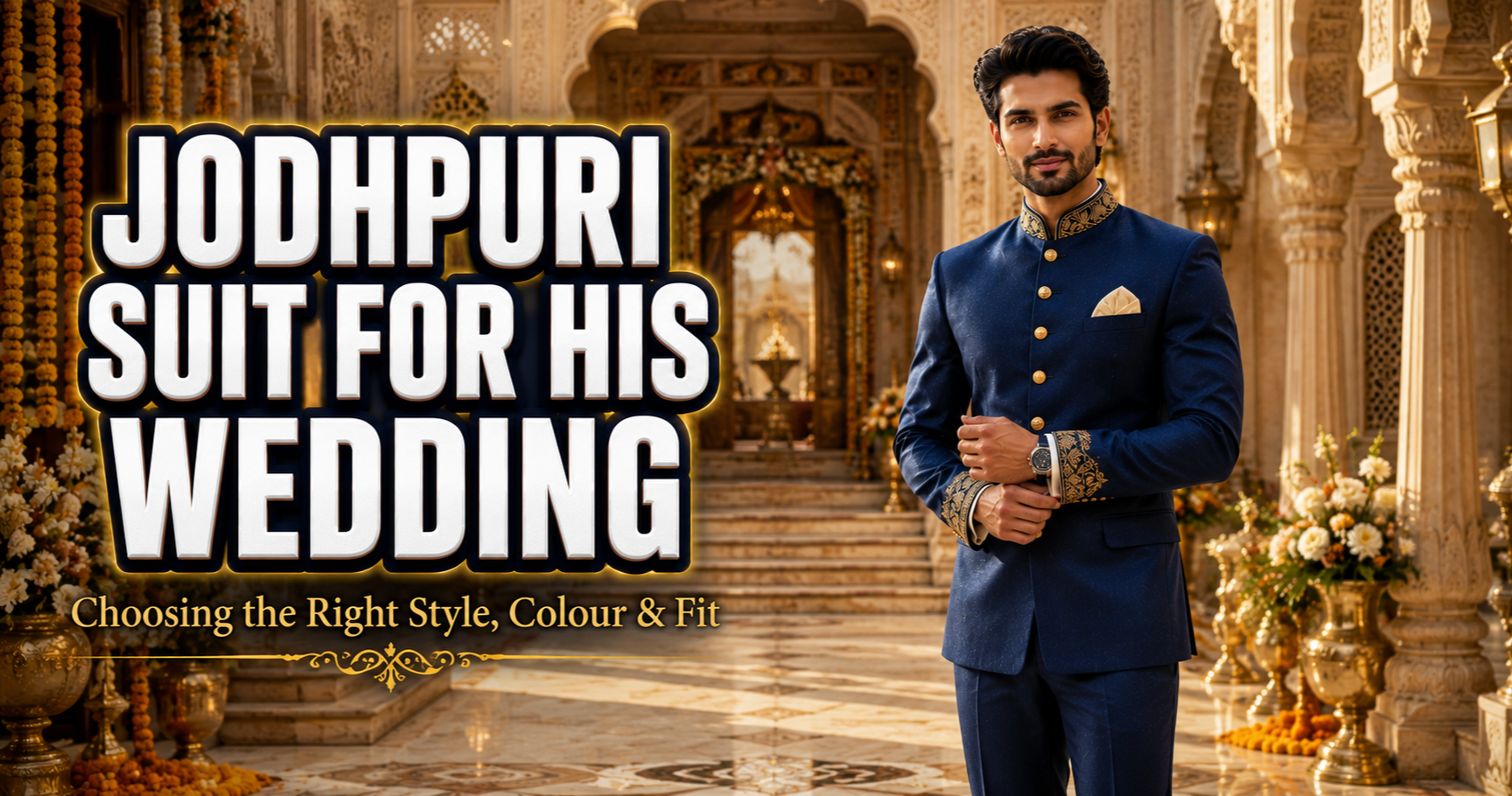
Jodhpuri Suit for His Wedding
Choosing a jodhpuri suit for groom wear is one of the more important style decisions a man makes for his wedding, right alongside picking the venue and the photographer. Unlike a rented tuxedo or a one-time-use sherwani, a well-chosen jodhpuri suit tends to become a keepsake, something worn again at anniversaries, family functions, or passed down as a memory of the day itself.
This guide walks through everything a groom actually needs to think about: how to pick the right style, which colours suit which function, how fabric affects comfort through a long ceremony, and how to avoid the fitting mistakes that show up badly in wedding photos. If you want the deeper backstory on how this garment came to be associated with Indian weddings at all, our piece on the story of jodhpuri suits covers that history in detail.
Why the Jodhpuri Suit Remains a Top Choice for Grooms
A royal jodhpuri suit for wedding ceremonies has stayed popular for a simple reason: it looks formal without looking borrowed from Western wedding traditions. The high collar and structured coat give a groom a commanding presence in photographs, and the silhouette holds up through hours of rituals, unlike looser garments that can look creased by the reception.
For readers who want the full breakdown of what makes this garment distinct from other Indian formal wear, our earlier article on the jodhpuri suit and its origins is a useful starting point before diving into groom-specific choices here.
Jodhpuri Suit vs Other Groom Wear Options
| Attire | Best For | Comfort Over Long Ceremonies |
|---|---|---|
| Jodhpuri Suit | Wedding ceremony, reception, engagement | High, structured fit holds shape while seated |
| Sherwani | Main ceremony, traditional settings | Moderate, looser drape can crease |
| Bandhgala (standalone jacket) | Sangeet, cocktail evenings | High, shorter cut allows movement |
| Western Tuxedo | Reception, destination weddings | High, but lacks traditional character |
Many grooms today choose a bandhgala jacket for the sangeet and reserve the full jodhpuri suit for the wedding ceremony itself. If you're weighing that decision, our detailed comparison in breaking down the bandhgala explains collar, button, and fit differences that matter for that choice.
Choosing the Right Jodhpuri Marriage Suit for Your Wedding Season
A jodhpuri marriage suit needs to match not just the couple's aesthetic but also the season and venue. A December wedding in Rajasthan calls for different fabric than a June wedding in Kerala.
- Winter weddings: Velvet or heavier silk blends add warmth and richness without needing a separate layer
- Summer or outdoor weddings: Lightweight silk, cotton-silk blends, or linen-based options prevent overheating during long outdoor rituals
- Destination weddings: Packable, wrinkle-resistant fabrics matter more than heavy embroidery
- Evening receptions: Richer, darker tones with subtle embellishment photograph better under artificial lighting
Colour Choices for the Groom Jodhpuri Look
Colour carries meaning at Indian weddings, and grooms typically shift tone across different functions rather than repeating one shade throughout the week.
| Function | Recommended Colours |
|---|---|
| Engagement | Ivory, beige, sky blue |
| Sangeet | Midnight blue, wine, emerald |
| Wedding Ceremony | Maroon, royal blue, gold with embroidery |
| Reception | Black, deep velvet tones |
Fit Checklist for Grooms
A groom wears his jodhpuri suit for far longer than a typical guest, often eight to twelve hours across rituals, photos, and the reception. Fit mistakes that seem minor at the store become genuinely uncomfortable by the end of the day.
- Try the coat seated, not just standing, to check for pulling at the shoulders
- Confirm the collar sits flush without digging into the neck during movement
- Check trouser length with the actual footwear you plan to wear, not casual shoes
- Leave room for a light inner layer if the wedding involves an outdoor evening function
- Schedule a final fitting no more than a week before the wedding

Jodhpuri Indian Wedding Dress for Men: Regional Variations
A jodhpuri indian wedding dress for men can look noticeably different depending on regional wedding customs. Rajasthani grooms often lean into heavier zardozi embroidery and a safa turban, while grooms in other regions may prefer a more understated jodhpuri paired with simpler accessories. Understanding your own wedding's regional tone helps narrow down embroidery and colour choices faster.
Looking for the right jodhpuri suit for your wedding day?
Browse the Groom's Jodhpuri CollectionYou can also visit our homepage at JodhpuriSuits.in for seasonal arrivals and made-to-measure booking options.
Frequently Asked Questions
What is the best jodhpuri suit for a groom?
The best choice depends on season and venue, but a silk or silk-blend jodhpuri suit in maroon, royal blue, or gold with zardozi embroidery is the traditional favourite for the wedding ceremony itself.
How far in advance should a groom order his jodhpuri suit?
At least six to eight weeks before the wedding, to allow time for measurements, tailoring, and any final alterations closer to the date.
Should the groom wear the same jodhpuri suit for every function?
No, most grooms change colour and embellishment across functions, choosing lighter pastels for daytime events and richer, darker tones for the ceremony and reception.
Is a jodhpuri suit comfortable for a full day of wedding rituals?
Yes, when fitted correctly. The structured cut holds its shape through sitting, standing, and movement, provided the coat is tried on seated during fitting.
Visit Our Store