
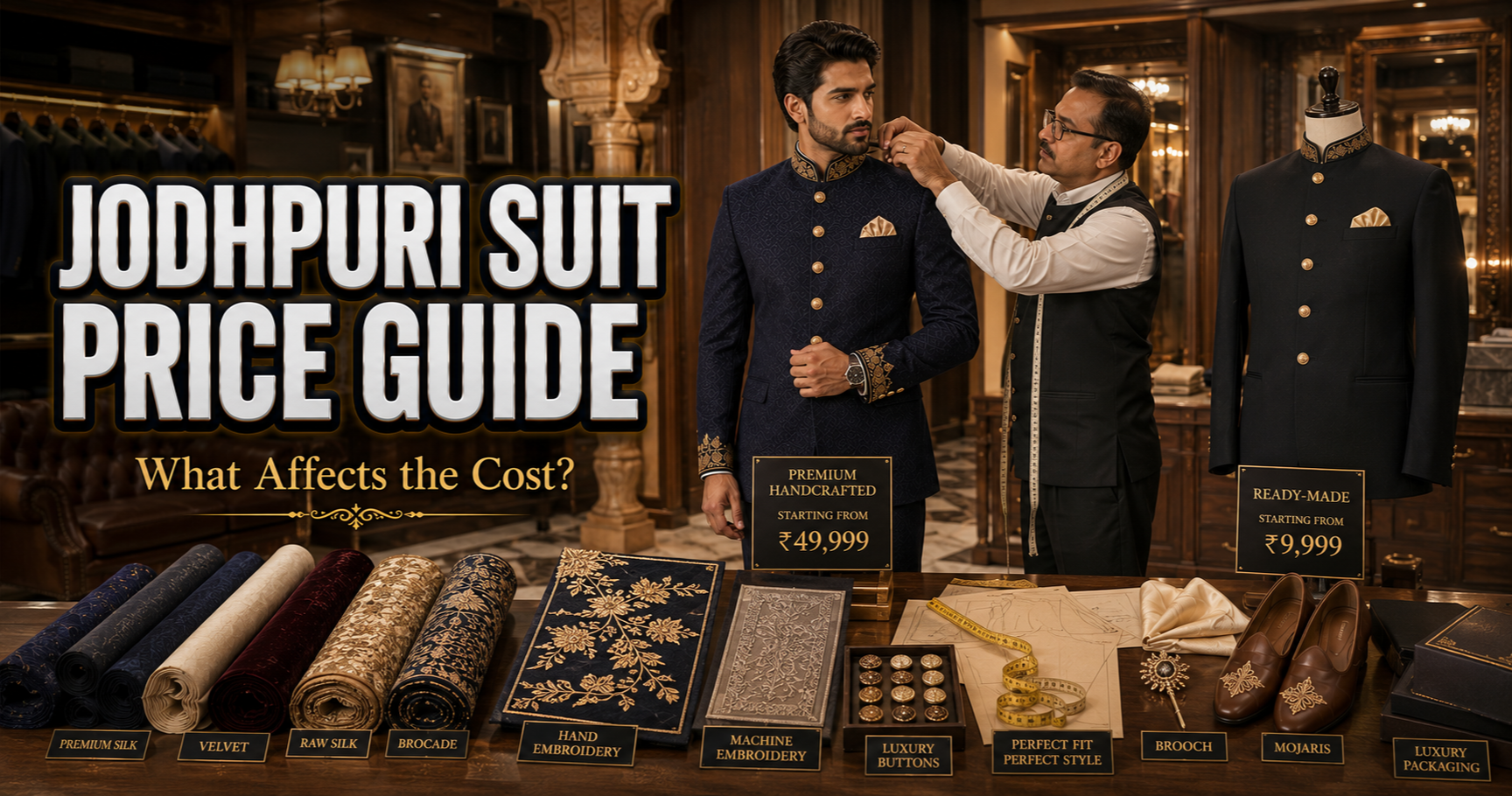
Jodhpuri Suit Price Guide: What You Should Actually Pay
Buying a jodhpuri suit is not like buying a regular blazer or a pair of formal trousers. The price range is wide, the factors that drive cost are not always obvious, and the difference between a reasonably priced suit and an overpriced one often comes down to details a first-time buyer cannot see at a glance. This guide explains what a jodhpuri suit price actually covers, where your money goes, and how to avoid paying for features that do not improve the garment's quality or appearance.
Whether you are shopping for a single wedding outfit or building a wardrobe of Indian formal wear, understanding the real cost structure helps you make better decisions. If you are buying specifically for your wedding, our complete groom's guide to choosing a jodhpuri suit covers the styling and colour side of that decision, while this guide focuses entirely on the financial side.
What Determines the Price of a Jodhpuri Suit
Before looking at specific numbers, it helps to understand what you are actually paying for. A jodhpuri suit price is not arbitrary. It reflects a combination of material costs, labour intensity, and the level of personalisation involved. The same silhouette can cost vastly different amounts depending on what goes into it.
| Cost Factor | How It Affects Price | Worth Paying Extra For? |
|---|---|---|
| Fabric type | Silk, velvet, and brocade cost more than cotton or synthetic blends | Yes, for the main ceremony. Less critical for short pre-wedding functions |
| Embroidery density | Hand-done zardozi or resham work adds significant labour hours | Only for the wedding day itself. Machine embroidery is fine for other functions |
| Tailoring method | Made-to-measure costs more than ready-made or altered stock | Yes, if the fit is complex or the occasion is highly photographed |
| Brand or designer label | Established names charge a premium for reputation and finishing standards | Sometimes, for guaranteed quality control and return policies |
| Accessories included | Some suits include stoles, pocket squares, or brooches; others do not | Compare total cost with and without accessories before deciding |
Price Ranges by Category
The jodhpuri suit market in India spans a wide range. Here is a realistic breakdown of what you can expect at different price points, keeping in mind that these ranges shift slightly by city and season.
Entry Level: Ready-Made and Basic Tailoring
At the entry level, you are typically looking at machine-stitched pieces in polyester blends or basic cotton silk. The collar may be structured but the finishing is usually simpler, and embroidery, if present, is machine done. These suits work for guests, one-time wear, or pre-wedding functions where the outfit will not be heavily photographed. The trade-off is in longevity and fit precision. A ready-made suit in this bracket often requires alterations to sit properly at the collar and waist, which adds to the final cost.
Mid Range: Better Fabrics and Semi-Custom Fit
This is where most wedding buyers should focus. Mid-range jodhpuri suits use genuine silk, raw silk, or lightweight velvet. The tailoring is either made-to-measure or heavily altered from a high-quality base pattern. Embroidery, when present, is often a mix of machine and hand-finished detail. The collar fit is noticeably better, the lining is breathable, and the trousers match the coat in both fabric and construction quality. For most grooms, this bracket offers the best balance of appearance, comfort, and value.
Premium: Designer Jodhpuri Suit and Bespoke Work
A designer jodhpuri suit sits at the top of the market. Here, the price reflects not just materials but the designer's pattern work, finishing standards, and brand reputation. Fabrics are typically top-grade silk, imported brocade, or heavy velvet. Embroidery is fully hand-done, often by specialised artisans. The fit is built from individual measurements, with multiple fittings to refine the collar, shoulders, and waist. These suits are investments. They are meant to last, to be reworn, and to photograph exceptionally well. For the main wedding ceremony, this is the category most serious grooms consider.

How Function Affects What You Should Spend
Not every wedding function justifies the same budget. A smart approach is to tier your spending based on how visible, how long, and how photographed each event will be.
| Function | Suggested Approach | Reasoning |
|---|---|---|
| Engagement | Mid-range suit, lighter embroidery | Important but typically shorter and less formal than the main ceremony |
| Mehendi | Entry to mid-range, breathable fabric | Outdoor, daytime, high movement. Comfort matters more than ornamentation |
| Sangeet | Mid-range with richer colour | Evening, stage lighting, and dancing require visual impact but not maximum embroidery |
| Wedding Ceremony | Premium or designer level | The most photographed, longest, and most formal event. Fit and fabric are critical |
| Reception | Mid-range to premium, darker tones | Evening formality matters, but the ceremony itself has already happened |
For engagement-specific guidance, our guide on engagement dress for men covers how to balance budget with the lighter tone of that particular celebration.
Hidden Costs to Factor In
The sticker price of the suit is rarely the final number. Several additional costs catch buyers off guard if they are not planned for:
- Alterations: Even ready-made suits usually need collar, sleeve, or waist adjustments. Budget for this separately
- Accessories: A pocket square, brooch, mojaris, and stole are often not included. These can add a noticeable amount to the total
- Dry cleaning and storage: Post-wedding care for silk and embroidered pieces is not optional. Factor in annual dry cleaning if you plan to keep the suit long term
- Rush fees: Ordering within four weeks of the event often triggers express tailoring charges
- Shipping: For online purchases, especially from designer boutiques, shipping and insurance can be significant
Designer vs Ready-Made: What Actually Changes
The gap between a designer jodhpuri suit and a ready-made piece is not just about the label. It is about construction details that are invisible until you wear the garment for several hours.
Designer suits typically use canvased construction rather than fused lining. This means the jacket holds its shape through body heat and movement rather than relying on glued interfacing that can bubble over time. The collar is cut and padded individually, not pulled from a standard pattern. Buttonholes are often hand-finished. The trousers are lined to the knee, not just partially, which improves drape and comfort during long ceremonies.
Ready-made suits, by contrast, use standardised patterns designed to fit a range of body types adequately but not precisely. The collar may sit correctly on some wearers and poorly on others. The fabric is often perfectly decent but not exceptional. For a guest or a short function, this is perfectly acceptable. For a groom at his own wedding, the difference in fit and finish is visible in photographs and felt over hours of wear.

When to Buy and How to Negotiate
Timing affects price more than most buyers realise. Wedding season, typically from October through February, sees demand peak and prices rise accordingly. Buying during off-season months can yield better deals and more attention from tailors who are less rushed.
When shopping at boutiques or with independent tailors, ask specific questions about what is included. Does the price cover fittings? Are accessories part of the package? Is the embroidery hand-done or machine-done? Vague answers usually mean the seller is charging a premium without delivering premium value. A reputable tailor or boutique will explain the construction and sourcing of their fabrics clearly.
What You Should Never Compromise On
Regardless of budget, there are two areas where compromise always shows:
- Collar fit: A collar that gaps, rides up, or digs into the neck ruins the entire look and cannot be fixed by accessories
- Fabric breathability: A suit that traps heat becomes uncomfortable within an hour, affecting your posture, expression, and movement in photographs
Everything else, embroidery density, brand name, accessory matching, is negotiable based on your priorities and the specific function.
How to Set a Realistic Budget
A practical approach is to allocate your total wedding wardrobe budget across functions rather than sinking everything into one piece. If you plan to wear a jodhpuri suit or bandhgala at multiple events, consider which event deserves the largest share of the budget and which can be served by a simpler, less expensive option.
For the full picture of how a bandhgala fits into a multi-function wedding wardrobe, and how its pricing compares to a complete jodhpuri suit, see our bandhgala suit guide and our bandhgala suit for the groom styling guide. These explain where the bandhgala works best and where a full suit is the smarter investment.
Ready to explore jodhpuri suits across every price range?
Browse the CollectionVisit our homepage at JodhpuriSuits.in for seasonal arrivals, made-to-measure options, and current pricing on new arrivals.
Frequently Asked Questions
What is a reasonable jodhpuri suit price for a wedding?
A reasonable price depends on the function and fabric, but for a wedding ceremony, a mid-range to premium suit using genuine silk or velvet with proper tailoring offers the best balance of appearance and value. Entry-level options work for guests or shorter pre-wedding events.
Why does a designer jodhpuri suit cost more than a ready-made one?
Designer suits typically use canvased construction, individually cut collars, hand-finished details, and higher-grade fabrics. Ready-made suits use standardised patterns and fused construction, which costs less but does not fit or last as well.
Are accessories usually included in the jodhpuri suit price?
Not always. Pocket squares, stoles, brooches, and mojaris are often sold separately. Always confirm what is included before comparing prices between sellers.
When is the best time to buy a jodhpuri suit to get a better price?
Off-season months, typically March through September, often offer better pricing and more tailoring attention than peak wedding season from October through February.
Is it worth paying extra for hand embroidery on a jodhpuri suit?
For the main wedding ceremony, yes. Hand embroidery like zardozi or resham has a depth and texture that photographs better and lasts longer. For pre-wedding functions, machine embroidery or minimal embellishment is usually sufficient.
What hidden costs should I budget for beyond the suit itself?
Plan for alterations, accessories, dry cleaning, potential rush fees, and shipping if buying online. These can add a significant amount to the total cost if not anticipated.
Visit Our Store